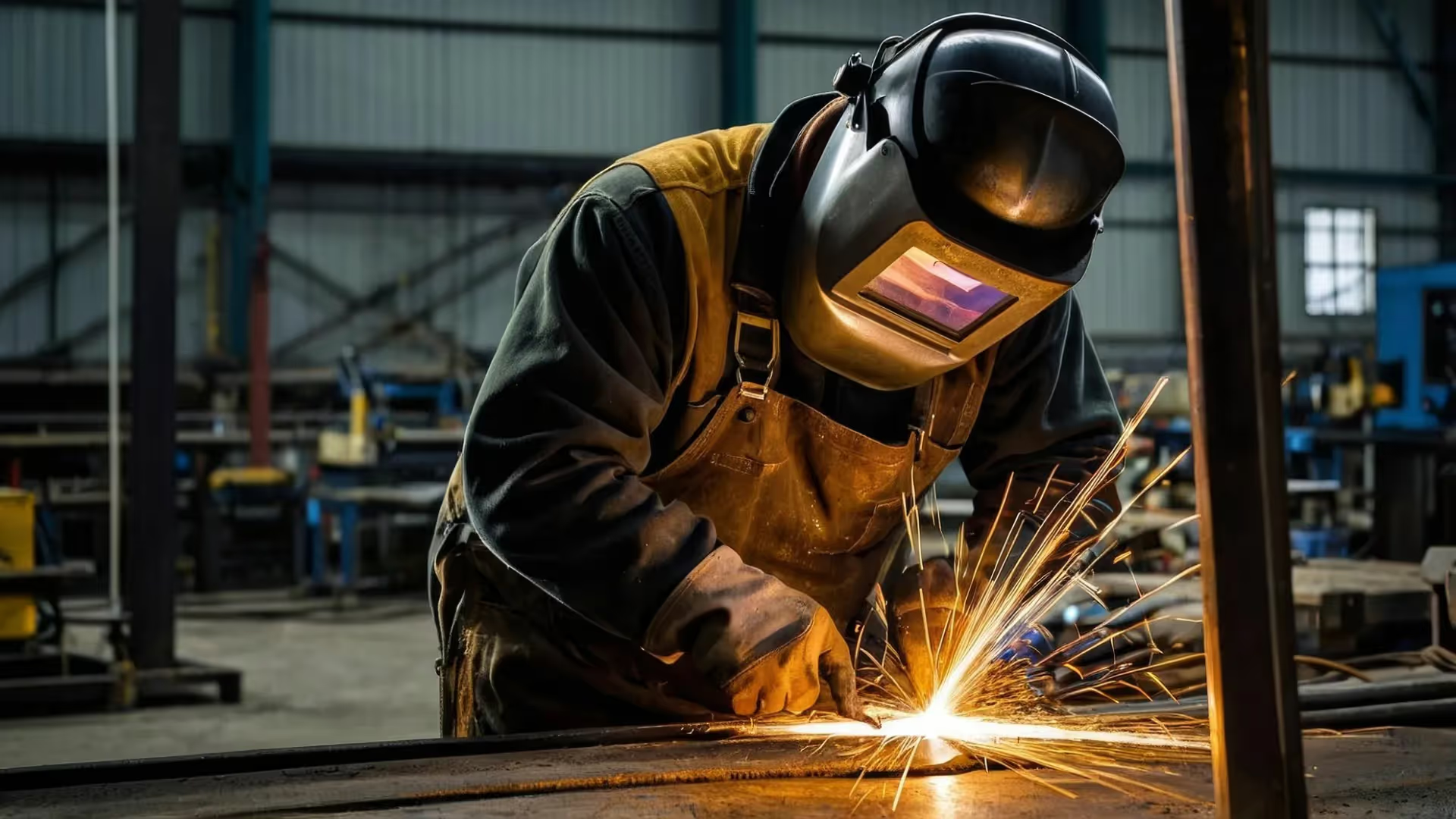

Sell Your Manufacturing or Industrial Business With a Process Buyers Respect
Founder-first M&A advisory for manufacturing and industrial companies that produce essential components, engineered products, and value-added services.
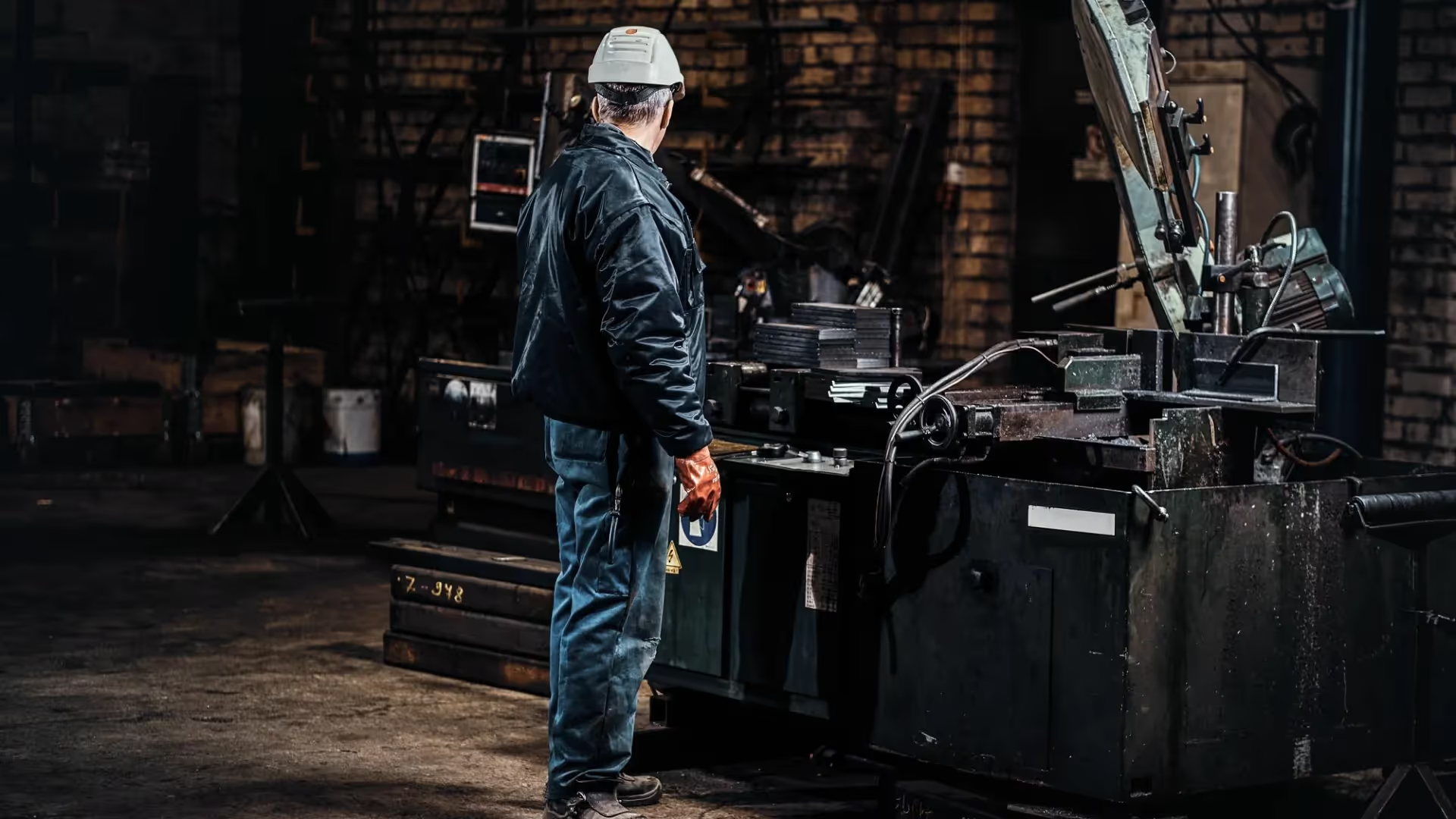
These businesses are the backbone of the real economy. The best ones trade actively through market cycles because buyers value durable customer relationships, high switching costs, and operational excellence that drives margin expansion.
Who We Serve
We advise owners of manufacturing and industrial businesses where performance is built on process discipline, repeatability, and execution on the shop floor.
Precision machining, fabrication, and complex assembly businesses

Specialty and certified manufacturers serving

Contract manufacturing, value-add assembly, kitting, and packaging platforms

Industrial services and MRO-oriented businesses supporting mission-critical assets

Niche OEM suppliers with repeat reorder dynamics and embedded customer relationships
If you have long-standing customers, sticky programs, and an operation that runs on systems, not heroics, you are in a buyer-active category.
Why This Space Is Buyer-Active
We represent privately held businesses in full exits, partial exits, recapitalizations, and succession-driven transactions.
Manufacturing and industrial M&A remains active because the right businesses have:
- Mission-critical products or services
- High switching costs and long customer relationships
- Operational complexity that is hard to replicate
- Consolidation potential for buyers seeking scale and margin improvement
Buyers pay up when risk is controlled and performance is provable.
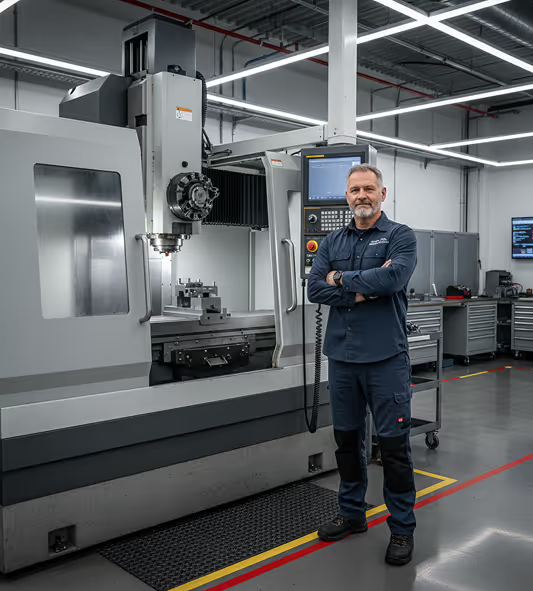
What Buyers Underwrite in Manufacturing and Industrials
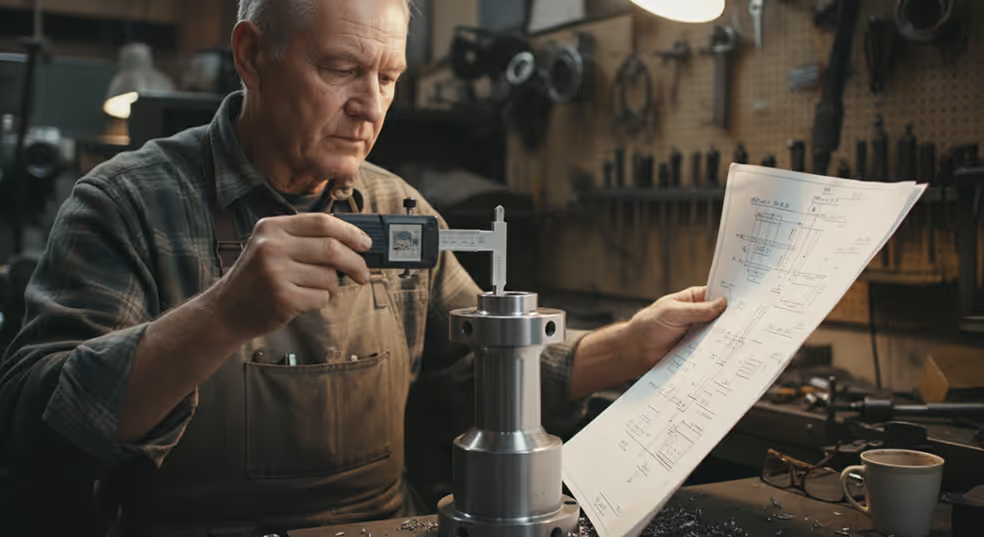
Buyers do not just buy EBITDA. They buy reliability, repeatability, and risk control. Expect underwriting to focus on:
- Customer concentration and the longevity of programs and relationships
- End market exposure and how cyclicality is managed
- Margin quality by product line, customer, and program
- Quote discipline and pricing power (and whether margins are defensible)
- Job costing and production reporting that reconciles cleanly
- On-time delivery and quality performance (scrap, rework, returns)
- Capacity and utilization (throughput, bottlenecks, scheduling discipline)
- Equipment condition and capex reality (maintenance history, replacement needs)
- Supply chain resilience and vendor concentration
- Leadership depth and how dependent the business is on the owner
When these are clear, buyers can underwrite with confidence and valuation holds up.
Common Deal Killers
& how we prevent them
Manufacturing deals often lose value in diligence because risk shows up late or financial truth is hard to prove.
The issues that stall or kill outcomes:
Customer concentration with no credible mitigation plan
Weak job costing or margin volatility that cannot be explained cleanly
Undocumented processes where quality and delivery live in people’s heads
Surprise capex needs due to deferred maintenance or unclear asset condition
Owner-dependent quoting, estimating, or customer management
Inconsistent reporting across programs, cells, or locations
Lack of clarity around working capital and true cash conversion
We identify these early, tighten what can be tightened, and package the business so the buyer sees a disciplined platform, not a risky black box.
How We Position Manufacturing Businesses for Premium Exits
Prepare
De-risk and Package
- Build a clean buyer-ready data room
- Clarify program economics, customer profitability, and true margin drivers
- Tighten reporting, job costing, and KPI cadence so performance is provable
- Identify capex, maintenance, and operational risks early and address them
- Build a narrative that translates shop-floor excellence into buyer confidence

Market
Create Competitive Tension
- Build the buyer universe based on your exact model and end markets
- Run a disciplined, confidential process that protects your operation
- Drive management meetings that keep you in control
- Evaluate offers on price plus structure, certainty, working capital, and risk

Close
Protect Value Through Diligence
- Manage diligence without letting it consume your team
- Control the working capital conversation with clarity and preparation
- Keep momentum and accountability through confirmatory diligence
- Push to a close that matches the intent of the deal, not last-minute chaos

Buyer Universe for Manufacturing and Industrials
Depending on subsector and scale, the buyer set typically includes:

Strategic manufacturers expanding capability, capacity, or footprint

Private equity platforms building specialized industrial groups

Add-on acquisition buyers seeking tuck-ins with repeatable delivery

Adjacent industrial operators buying certified capabilities or end-market access

Situations We Help With
"Selling a precision machining shop, fabrication business, or contract manufacturing operation"
"Recapitalizations for family-owned manufacturers wanting partial liquidity while staying involved"
"Partner or generational buyouts on the shop floor where continuity and discretion matter"
"Pre-sale job costing tightening, capex assessment, and reporting cleanup (6–24 months out)"
"Full sell-side execution including working capital negotiation and equipment transition"
You’ve got questions, We’ve got answers
We believe clarity builds confidence. Here are answers to some of the most common questions we receive.
If your financials reconcile cleanly, job costing is credible, and performance is measured consistently, you are close. If those are not tight yet, we build the plan to get there.
Durable customers, defensible margins, operational repeatability, quality performance, and a clear view of capex and working capital.
We prepare early so it is measurable, defensible, and aligned with how the business actually runs. Most working capital problems come from ambiguity, not reality.
Yes. Surprises in capex can turn a premium deal into a discounted deal. Maintenance history, replacement planning, and clarity matter.
It is common. The key is demonstrating contract strength, program longevity, switching costs, and a credible plan to reduce risk over time.
In manufacturing, premature disclosure can destabilize your shop floor, customer relationships, and supplier terms. We run a staged process where only vetted buyers receive detail, and we control timing so your operation stays steady throughout.
Many manufacturing businesses face a generational transition where the next generation either cannot or does not want to take over. We help structure these transitions cleanly—whether that means a full sale, a partial recap, or a management buyout—so the founder’s legacy is preserved and the outcome is fair.